
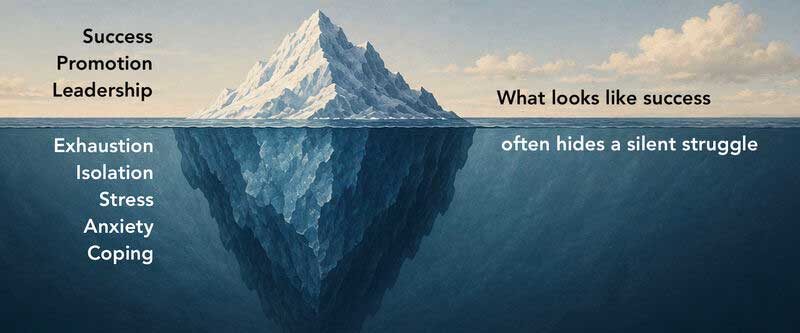

When the work of caring for others becomes heavy, remember that caring is both a strength and a challenge. Research informs us that carrying the weight of other people’s trauma, grief, and injustice can lead to compassion fatigue and burnout over time. The goal is not to care less, but to care in a way that is sustainable while acknowledging the emotional weight. The work matters, but so do the people doing the work.
In my practice, I’m seeing anger and irritability, difficulty in separating work from personal life, those too exhausted to have a personal life, and a rise in coping behaviors that soon take over. When the pressure does not stop, people reach for relief. Not always in obvious ways. Often in patterns, habits, and small decisions that add up. What starts as “taking the edge off” can slowly become a place to hide.
- Alcohol, drugs, cannabis, gummies, and edibles
- Overeating, shopping, gambling, sex
- Doom-scrolling, binge-watching TV, playing video games
High performers will rarely call it addiction. They call it managing stress, unwinding, and just getting through the day. Not because they are weak, but because the emotional load has been too heavy for too long. These behaviors can only offer temporary relief. In time, they take away clarity, presence, and connection.
6 Things You Can Do Now
- Set Boundaries
- Connect With Colleagues
- Practice Self-Care
- Celebrate Small Wins
- Grant Yourself Grace
- Seek Support
The greatest danger is not the behavior itself. It is the silence around it. This is where a therapist and a coach—or better yet, a therapist who is also a coach—can be helpful. In part 2, we will discuss addiction and taking the edge off.